
Material Blowers: The Most Versatile Machines in Your Fleet
Share this article!
Materials blowers are designed to be a valuable asset for landscaping work, erosion control projects and construction job sites. The versatility of a material blower saves businesses time and money not only in its ability to handle a variety of materials, but also its material and labor efficiency.
Material blowers are capable of reducing material costs by up to 40% and increasing productivity by up to 700%. Those savings add up, especially when profits are dependent on getting the most out of every dollar you invest into your business. With that kind of savings possible, material blowers are a machine that landscaping and construction businesses of all sizes must consider.
One of the biggest values a material blower offers is its ability to accept and disperse different types of materials, from mulch and soil to seed and rocks. That’s right; material blowers can do more than spread mulch on a landscaping site or a playground. The size of the machine will determine what materials it can handle. Below are some options that may allow a small- or medium-sized business to grow with a material blower.
Bark and mulch
Bark and mulch can be a great benefit to vegetation and property aesthetics. Mulch insulates and regulates soil temperature to protect against extreme temperature swings, reduces weed growth and conserves water.
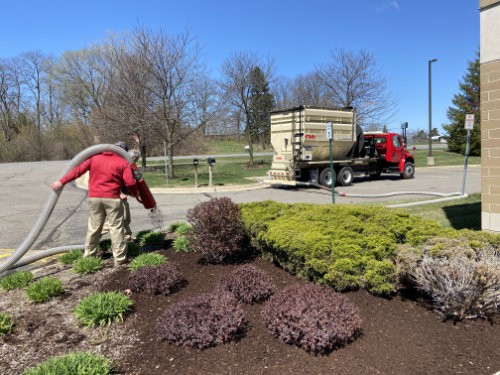
Applying mulch or bark by hand is a time-consuming process and often leads to uneven distribution. A material blower can make quick work of mulch or bark installation with fewer workers and install material at a consistent depth. This consistency allows workers to install mulch at the required depth and not “over fill” an area. Even around new or delicate flowers, material blower settings allow workers to quickly and efficiently deliver a layer of mulch without harming plants.
Soil and compost
Adding soil or compost to a new yard in an even layer can cost many man hours depending on the size of the job. Material blowers are a great answer for landscapers.
Starting a lawn with a level layer of topsoil is important in producing great results with hydroseeding. For established lawns, treating the yard with compost in the fall will assist in maintaining its health and appearance. In both cases, material blowers can broadcast soil and compost on yards of all sizes, hills, tough terrain and hard to reach places.
Rock and gravel
Larger material blowers are capable of applying rock and gravel to a job site. Rock and gravel are common materials used in landscaping to save money on water and maintenance. Rock adds color and texture to hardscaping. Rock or gravel options include pea gravel, lava rock, crushed granite gravel, river rock and more.
Overseeding
Overseeding is the application of grass seed to an established lawn. It can be applied to a residential yard or a large sports field, for example. Overseeding is widely regarded as a critical step to thicken a lawn, filling in bare spots and reducing weed growth.
Overseeding involves a number of steps, including mowing and preparing the yard before applying the grass seed. A landscaper may choose to apply a shallow layer of soil with a material blower, then transition the machine to the grass seed to make quicker work of the job. Toward the beginning of the fall season, the landscaper may return to pamper the lawn with a compost application.
Interiorscape material application
Interiorscapes add the beauty and benefits of plants to an environment, whether indoor or outdoor. Interiorscapes in residential and commercial locations increase the interest of a space, improve air quality, promote a relaxing environment and boost the acoustics of a room.
When interiorscape projects include rock as the bed of the vegetation, a material blower reduces multiple trips of loading, hauling and spreading the material. With a material blower, park the truck near an entrance and run the hose to locations that need the selected material. No more long hours of back-breaking labor.
Sediment control filter sock
The Environmental Protection Agency requires construction sites to control stormwater runoff and the potential for pollutants. Filter socks are a common solution found on construction sites to control sediment and erosion. They can also be used on landscaping projects to minimize erosion.
Silt fencing is another option sometimes used to control sediment and erosion. However, filter socks are easier to install and use less material with the help of a material blower, leading to savings in time and money on labor and materials.
Erosion control blankets
Erosion control blankets are open-weaved “blankets” made of natural and biodegradable materials. They’re designed to protect an area prone to erosion and allow new vegetation to grow, which is essential to preventing erosion long-term.
Construction and landscaping companies will often use erosion control blankets on slopes, on the banks of waterways and near wetlands. Instead of using a pre-made, rolled erosion control blanket, material blowers can apply similar materials with the same effectiveness to protect soil-rich areas and base soil from degradation.
Material blowers to meet your needs
FINN material blowers are versatile machines, capable of increasing productivity and reducing labor and material costs. From landscaping contractors to construction companies, material blowers can handle many types of materials to support your business. Between cost savings and increased productivity, material blowers can lead to growth for companies of all sizes. FINN has a complete line of material blowers ready to cover some ground. Check out our material blower page or contact a local FINN dealer, and we’ll help you find Smarter Ways to Work.

Folow Finn Corporation on Social

How to Lay Mulch Evenly – When & Why to Use a Mulch Blower
Understanding the best way to spread mulch evenly can mean the difference between a great-looking, environmentally-friendly landscape, and one that falls short in both areas. From spreading mulch basics to how to spread mulch evenly, and when to use a mulch blower to achieve the desired results, these landscaper insider tips can help elevate your next project’s aesthetics and help…

Bark & Mulch Blowing 101
One of the best ways to enhance soil composition, prevent erosion, and improve the aesthetics of any landscaping project is to utilize bark and mulch blowing. For our purposes, bark and mulch blowing are effectively the same thing, and can generally be used interchangeably. Bark and mulch are both great choices to prevent weed growth and invasion, improve soil quality…
Hydroseed vs. Sod vs. Grass Seed
If you’re starting a lawn from scratch, you’ve probably come across the three common methods for seeding: sod, grass seed, and hydroseed. In order to determine the best choice for your yard, you may want to ask yourself a few questions before you get started, and familiarize yourself with each of the processes so you can make the right choice…